 |
|
|
 |
 |
|
Historical Sketch of Lyon County, Iowa The following history of Lyon County, Iowa was written in 1872. The author was obviously trying to attract more settlers and no doubt there was plenty of exaggeration, but still it's fascinating to read. Although none of the words have been changed, much has been removed -- whole paragraphs, and lots of them. What remains here is almost exactly half the size of the original article. This article was found at the following website: http://iagenweb.org/lyon/bookhist/historic/sketch1.htm. While reading this, keep in mind [it is sometimes noted in parentheses like these] that the year this was written was 1872. John and Louanna Thompson and their small children settled there somewhere between 1868 and 1876. They had been in Iowa since 1868, but didn't start out in Lyon County.
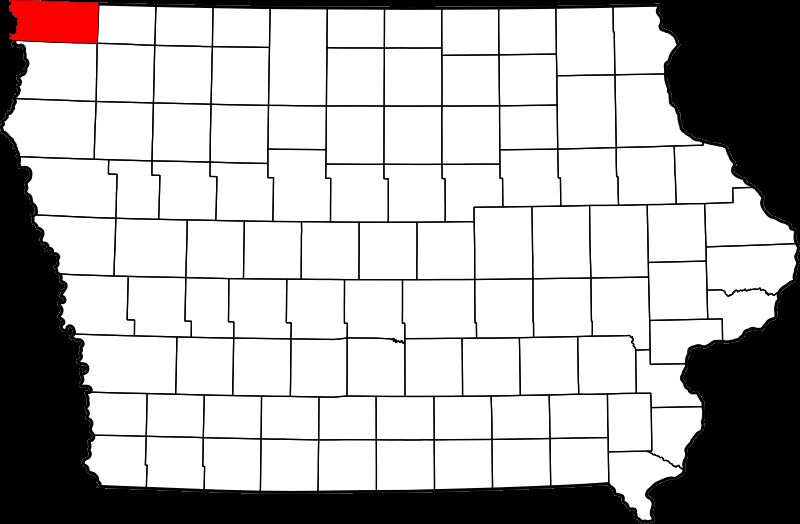
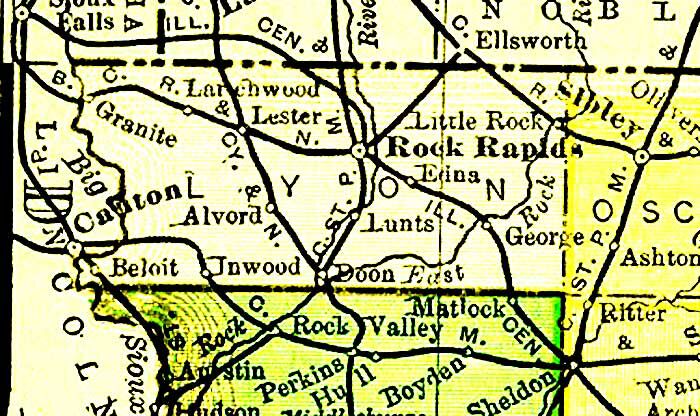
HISTORICAL SKETCH Lyon County, forming the northwest corner of the State of Iowa, is bounded on the north by the State of Minnesota, west by the Big Sioux River, which separates it from Dakota Territory; on the south by Sioux County, and by Osceola on the east. These limits embrace a beautiful region of country, extending 37 miles in length east and west, and about 17 miles in width, containing about 575 square miles, or 368,000 acres. The altitude of this county is about 1,400 feet above sea level, and it lies east of the middle of the United States. Prior to the year 1851, the territory embraced within the present limits of Lyon County had never been designated by any particular name. And the vast region of country comprising Northwestern Iowa was almost entirely unknown. THE INDIANS At the time of the creation of Buncombe County (now Lyon), in 1851, the title to the soil still vested in the Indians. However, on the 23rd of July, 1851, a treaty was concluded with the Sioux, by which they relinquished to the United States all their lands in Iowa. The Yanktons and Tetons, tribes of the Sioux, formerly inhabited the region watered by the Big Sioux and Rock rivers and their tributaries, comprising what is now Lyon County. These were the most savage and warlike of any of the great Sioux nation, and maintained an almost constant warfare against the Iowas, Omahas and Ottoes, powerful rivals, who lived to the south. Although the Indians relinquished all claim to their lands in Iowa in 1851, and stipulated to remove at once to their reservation on the Upper Missouri, they were loth to leave their favorite hunting grounds, and did not take their final departure until 1869. Some lingered around their old council fires, and others returned on frequent hunting excursions. With the exception of a few families at Sioux City, no settlement had yet been made in Northwestern Iowa, and the country was little known except to Indian traders, hunters and explorers, for many years. In 1854, Dr. John K. Cook began the Government surveys, and the same year laid out the town of Sioux City. In 1855, the United States Land Office was opened at Sioux City, and on the 11th of September of the same year, Alexander Anderson, United States Deputy Surveyor, completed the field surveys for the south tier of townships in Lyon County. The remainder of the surveys were completed the two following years by different United States deputy surveyors. The abundance of game and fur-bearing animals soon brought several parties of hunters to the Rock and Sioux rivers, who were joint occupants, with the Sioux, of Lyon County for several years. To Lewis P. Hyde belongs the honor of making the first settlement in Lyon County, who, on the 23d of July, 1866, entered, as a homestead, lots 1 and 2, section 19 and lot 5, section 20, township 98, range 48, lying on the Sioux river, about two miles above what is now Beloit. Mr. Hyde formerly resided in Wisconsin. Being surrounded by a family of grown up sons, he decided to emigrate to the great West, where each could secure that birthright for every American citizen--a good home. Mr. Hyde and his sons immediately set to work and erected the little cabin which formed the first dwelling in Lyon County. Little did they dream, as the sound of their axes broke the solitude never before disturbed by the husbandman, that so soon should they be surrounded by a prosperous community, and all the blessings of civilization. During this summer(1866) the preliminary survey of the Sioux City and St. Paul Railroad was made, and their land grant located. This was the beginning of an enterprise which is now doing good work in helping to build up Northwestern Iowa and Lyon County. In the fall, Mr. Hyde and his sons returned to Minnesota to pass the winter, and make preparations to remove their families to the county in the spring. And Lyon County was left to trappers, Indians and wild beasts, with no record of its history for the winter of 1866-7. In the spring of 1867, this little band returned with their families to the scene of their former labor and commenced work. With Sioux City, seventy miles distant, for their nearest market, and the treacherous Sioux Indians to keep them company, their advantages for a successful summer's work must have been anything but good. In the fall of 1867, Halvor Nelson, of Clayton County, who is justly regarded as one of the fathers of Lyon County, accompanied by his brother, Ole Nelson, started West to prospect for a location to engage in the mill business and build up a town. Mr. Nelson followed up the Big Sioux to where now stands the flourishing town of Beloit. Here he found a splendid water power, situated in one of the most extensive and fertile valleys in the West. Regarding these as the sure foundation of a city, he proceeded at once to Sioux City and entered a large tract of land embracing what is now Beloit. He then returned to Clayton County, to prepare to bring out a colony of Norwegians in the spring. During the winter of 1867-8, L.P. Hyde and family, and "Uncle Dan," who, during the summer, had taken a homestead at "Uncle Dan's Ford," were the only inhabitants of Lyon County, and we are able to glean little concerning the events or character of this winter. Early in the spring of 1868, Mr. Nelson, with his colony, consisting of thirty wagons, took up their journey for Lyon County. The last hundred miles of their journey lay across an open prairie, without bridges, or even a trail to guide their course. The water being high, they encountered many difficulties in crossing streams and keeping their route. Reaching Beloit, part of the colony settled in Dakota, and James Paulson, Chris. H. Sogn, A.K. Lee, Arne Helgerson, Gano Gunderson and Morton Hanson settled near Beloit, where, amid many difficulties, they began opening farms. Mr. Nelson immediately commenced work on his sawmill, and, although obliged to freight machinery and supplies from Sioux City, had it running before winter. A good quality of oak, black walnut, ash, and cottonwood lumber was turned out, which greatly aided in the settlement of the Sioux Valley. In the month of May of this season, H.D. Rice, then of Clay County, Iowa, encouraged by tales of the wonderful beauty of Lyon County, proceeded to explore the Rock river. Mr. Rice was much impressed with the extent and richness of this valley. But it was while standing on the highland above the now rising town of Doon that nature, in all its romantic beauty, seems to have burst upon his view. Before him, the broad and fertile valley of the Rock, with its sparkling waterfalls and groves of timber, wound away to the southwest until lost in the blue horizon of Dakota. The meandering Little Rock, its bright waters shimmering in the sunlight; the West Branch, with its delicate fringe of willow, and the green plateaus of these limitless prairies lay, as yet untouched by the hand of civilization, before him. Who shall tell what were his feelings as he stood thus transfixed? Suffice for us to say, that he resolved here to build his permanent home. And from that time until the present, Mr. Rice has never lost faith in the ultimate prosperity of this country, and his voice and hand have ever been given in aiding the development of Lyon County. In July, Mr. Rice, accompanied by L.F. Knight, reached the forks of the Rock a second time, where they built a cabin, and began the first settlement on Rock river. In August, Mr. Rice returned to Clay County for his family, leaving Mr. Knight alone at the forks of the Rock. This circumstance gave rise to the name of Doon, which this place now bears. Sitting in solitude on the bank of this beautiful stream, far removed from all humanity, with naught but the songs of the birds or the murmur of the waterfall to break the silence of the wild, Mr. Knight recalled those touching lines of Burns', beginning:
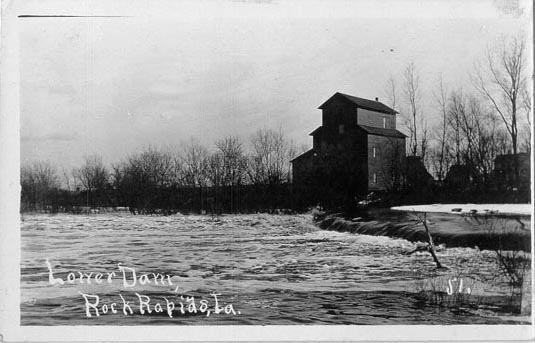
"Ye banks and braes o' Bonnie Doon, Which suggested the name which he gave to this place, and which it will ever retain. In August, Emerick Erwin and H.W. Reves built a cabin near the forks, where they spent the following winter. Mrs. Rice reached Doon in September, and moving into their little cabin, was the first white woman to settle on the Rock river. J.B. Hartson, of Wisconsin, arrived at Doon the latter part of December, and selected the tract of land where he now resides. These persons and the little colony at Beloit comprised the population of Lyon County for the winter of 1868-9. This winter was very mild, with little snow. Mr. Rice turned his stock out on the river bottoms early in March, where they subsisted in good order without feed. The various bands of Yankton Indians hunting through this region seem to have been peaceable, and although almost cut off from the world, these little settlements passed the winter in comparative comfort. In May, 1869, Charles H. Johnson, of Wisconsin, one of the hard-working pioneers of Lyon County, explored the valley of the Little Rock river. Mr. Johnson was highly pleased with the great natural beauty and fertility of this valley. He accordingly selected a homestead at the junction of the Little Rock river and Otter Creek, and began the settlement of the Little Rock valley, now one of the best settled in Lyon County. Soon after this, T.W. Johnson, A.A. Johnson, Emerick Erwin, and Messrs. McGuire, also settled near the forks of these streams, and the settlement of the Little Rock was fairly begun. Prior to this, no settlement had been made in what is now Rock township, and the Rock River valley on the north part of the county had never been visited with a view to settlement. In the month of June, D.C. Whitehead, of Webster County, a live man, who has ever been foremost in the development of Lyon County, proceeded to explore the resources of this region. On his route he was joined by Matthias Sweesy and Dolos Towsley. On the 22nd of June this party reached the rapids at the junction of the Rock and Kanaranzi rivers, and here stood enchanted by the sound of the waterfall, which for ages had wasted its power and lavished its beauty upon the wilderness. They were at once filled with enthusiasm and high hopes of the future greatness of the place. Mr. Whitehead here gave it the name of Rock Rapids, which will ever remain unchanged. The party then selected homesteads, Mr. Whitehead nearly adjoining the present town plat, and Messrs. Sweesy and Towsley, a short distance above, and then left to return with their families. Thus was begun the now thriving town of Rock Rapids and the settlement of Rock Township. In the fall of 1869, the Dubuque and Sioux City Railroad was completed to LeMars. This brought markets and mail thirty miles nearer; but it can hardly be said that crossing a prairie forty miles in width, for a sack of flour or a letter, are "excellent facilities." At the close of the year 1869, the population of Lyon County probably did not number more than a hundred souls. This may seem strange, as the first settlement in the county had been made three years before. But this region of country had as yet scarcely been heard of, and the few settlers who were there came almost by accident, or were brought in by the exertions of those who had settled first. The country, for a hundred miles to the east and south, was unsettled, and received the heavy immigration then passing westward, or it passed on to the extensively advertised regions to the south and west. In September [1870], the Federal census was taken in Lyon, giving a population of 221 persons, probably about the actual number. On the 28th of May, 1871, was born the first child in Lyon County, Odena Lee, a daughter of Mr. and Mrs. A.K. Lee, of Lyon township. The first sermon preached in Lyon County was delivered by Rev. Ellef Oleson, of Dakota, on the 6th of September, 1870, at Mr. Nelson's residence in Beloit. At the same time and place were married, by Mr. Oleson, Ole Torberson and Petrina Peterson, the first marriage in Lyon County. As winter closed upon the inhabitants of Lyon, they were called upon to record the first death in the county, being that of Lyman A. Wagner, son of Mr. and Mrs. John A. Wagner, who died on the 26th of December, 1870, aged 4 years and 20 days. This event cast a gloom over the little community in Lyon, and reminded them that as with individuals, so it is with a community, a county, or a nation, no sooner do we begin to live than we begin to die. During the latter part of the winter of 1870-1 the first school was taught in Lyon County by Mrs. D.C. Whitehead, at Rock Rapids. With the opening of the spring of 1871, Northwestern Iowa received the largest immigration in its history, and Lyon County received its full share. This was greatly owing to the construction of the Sioux City and St. Paul Railroad, then begun. Settlers crowded in and took the last of the vacant Government lands. One company from Appleton, Wisconsin, under the leadership of W.B. May and Anson Tolman, numbering twenty-five families, settled upon a fine body of land on the Little Rock river. This spring a mail route was opened from LeMars, via Doon and Rock Rapids, to Luverne, Minn., which event was hailed with joy by the inhabitants of this so long isolated region. During this spring a fine frame school building, the first in Lyon County, was built at Rock Rapids. On the 25th of July, at Rock Rapids, was commenced the publication of the Rock Rapids Journal, C.E. Bristol, editor. This was the first issue of a newspaper in Lyon County, and although the publishers were, for the time, obliged to procure their printing from outside the county, it performed a good work in making known the superior inducements which this region offered to immigration. During the fall a large settlement was made throughout the county, especially in the eastern part, and by the beginning of the winter of 1871-2 the population of the county was probably one thousand. On the 10th of October, 1871, was held the first election in the county. Ninety-seven votes were polled at this election, all of which were given for the Republican ticket. With the spring of 1872 came the beginning of a new era in the history of Lyon County. A large amount of land was broken the year previous, the season has been an exceedingly fruitful one, and a bountiful harvest, with health and prosperity, has rewarded the pioneer for his toil. The Sioux City and St. Paul Railroad has been completed, opening up the great lumber markets of Minnesota and Wisconsin and the coal fields of Iowa. With the railroad have come the telegraph and the printing press, and noble men and women to build happy homes and people our lands. Capital has begun to join hands with the labor of the pioneer in developing our natural resources, and the sunshine of prosperity has beamed upon us. We are no longer contending with savages and wild beasts for the land we occupy. The blessings of art and science, the school and the church, society and fraternity, and all that contributes to the usefulness and happiness of man we now enjoy. Thus have a band of hardy pioneers, enduring the perils and privations of frontier life, laid the foundations of Lyon County. They have organized society in the wilderness; first the cabin, the field, and then a neighborhood; then a school, a village, a church and a county. They have erased the landmarks of the red man, and made the plow to take the place of the bow and arrow in obtaining a livelihood, and intelligence and humanity to supersede barbarism and war. Lyon County, as before stated, is about thirty-seven miles in length, east and west, by seventeen miles in breadth; and we doubt if anywhere in the United States may be found a more fertile and beautiful region of county than is embraced within these limits. The surface of the country may be said to be smoothly undulating. There are no hills or stone to interfere with the most successful cultivation, and yet there is sufficient elevation and depression of surface to admit of perfect drainage. Nowhere is there to be found flat land or stagnant water, the whole country being gently rolling, or a succession of broad plateaus sloping to the southward. By looking at the accompanying map, it will be seen that the country is well watered. These streams, unlike those in many portions of the West, are rapid, their waters clear and pure. The smaller ones meander through all parts of the county, furnishing excellent stock water, and giving a proper proportion of pasture meadow and field. The larger streams flow through broad valleys of rich bottom lands, and are bordered by fine groves of timber. They abound in fish, furnish valuable water powers, and delightful scenery. But the most striking topographical feature of Lyon County is our grand prairie. Here there is a vastness, a beauty and sublimity that no pen can describe. From April to October there is one vast sea of green, varied in hue with myriads of wild flowers. Away as far as the eye can reach, stretches a boundless expanse of rolling prairie, till fading imperceptibly into the distant horizon. The esthetic beholder is lost in wonder and admiration, and mourns that there is no hand to transform these green slopes and rich valleys into productive farms and happy homes. WHEAT We doubt if anywhere since being transported from its native plains in Central Asia, has this great cereal found a more congenial soil and climate than in Northwestern Iowa and Lyon County. The great essentials to successful wheat-growing, a rare atmosphere with a soil rich in lime materials, here exists in the most favorable conditions. The variety principally grown is that known as spring wheat, which is sown as soon as frost disappears in spring, and is harvested in July. Its growth is heavy, the straw strong and berry plump. During the four years of its cultivation in Lyon County, it has never been affected by any disease whatever. With regard to yield, good judges place the average of the whole crop in the county, the present season, at from twenty-five to forty bushels per acre. These estimates will appear like exaggerations in many portions of the East, but we believe they will not vary much from the actual yield. It is true that the present year [1872] is unusually favorable, but the crop has never fallen below twenty-two bushels, and it is safe, to calculate the average yield at twenty bushels per acre, or over. The land is broken in May and June, and the next spring is ready for sowing without being plowed. Sowing, reaping, raking and threshing are all done by machinery, there being no hills, stumps, rocks, or other impediments to its use. CORN There is an impression prevailing to a considerable extent that this cereal cannot be raised with success in Northwestern Iowa, owing to coldness of the climate. This opinion has no foundation, as will be shown in our article on climate. Actual experience and statistics show that the mean summer heat of this region of the Missouri slope is equal to that required for the successful growth of corn. With a congenial climate and a warm soil, rich in nitrogen, it is one of our most certain and valuable productions. Mr. L.F. Knight has cultivated corn on his farm at the forks of Rock River since 1869, and has never failed to secure a good crop, and it has never been cutoff by drought, frost or slight, yielding, in some years, as high as eighty bushels of shelled corn to the acre. CLIMATE AND HEALTH Our great altitude --1400 feet above the sea level -- and perfect drainage system, give a dry, pure and invigorating atmosphere, and forever settle all question regarding the healthfulness of our climate. Every person who contemplates immigration to the West, should give this subject his first and most earnest consideration. Here they will be spared the malarias diseases which have attended the settlement of many of the western States, and which are still the scourge of the finest regions in the Southwest. A case of fever and ague was never known in Lyon County, and the whole country is absolutely free from diseases of a miasmatic origin. This rarity of atmosphere has also a highly beneficial effect upon those suffering from pulmonary complaints, and it is confidently believed that these diseases, incident to the more damp atmosphere of the New England States can never arise in this country. During the winter, rainfall is almost unknown, and, although the winters are cold, the air is so dry and bracing that their severity is not felt as in the humid regions of the East, or changeable climate of a more southern latitude. But the crowning beauty our climate is autumn. The delightful season known as "Indian summer" is here often prolonged into December, and is peculiarly charming. A calm, soft, hazy atmosphere fills the sky, through which, day after day, the sun, shorn of his beams, rises and sets like a globe of fire. By night the heavens are lighted by the burning prairies, the forests are tinged with the most gorgeous hues, and all Nature seems to wear the enchantments of fairy land. Almost imperceptibly these golden days merge into winter; and so the seasons pass, year after year. RIVERS We have not claimed a better soil than that of adjoining counties, but in the number of character of its streams, and facilities for water power, Lyon County surpasses any portion of Northwestern Iowa. The county is drained by the Rock and Big Sioux rivers and their tributaries. THE ROCK RIVER And its numerous effluent's drain the central and eastern portions of the county. This stream takes its name from a bold outcrop of the red quartzite rock, called the "Blue Mounds," near the town of Luverne, Minnesota, from which the Yanktons gave it the name of "River of the Red Rock." It rises in Minnesota, about seventy-five miles north of the State line, and flows southward, passing nearly through the center of Lyon County, and unites with the Big Sioux about fifteen miles below its southern boundary. Its length is about one hundred miles, and it drains over a million acres of farming lands. It is a clear, rapid and powerful stream, with a rocky or gravel bed, and an average width of from eighty to one hundred feet, and a depth of from three to six feet. It flows through a beautiful valley from one to three miles wide, the sides of which blend gracefully with the prairie beyond. Between the line of highest overflow and the prairie there stretches a continued level plane, which will serve the excellent purpose of a bed for a railroad-which must follow the development of this rich valley. The scenery on this stream, especially in the summer, is most delightful. The beholder, at each sweeping bend of the river, is startled by a prospect of groves, parks, waterfalls and green slopes. The view in the distance is lost in the dim outline of the winding forest, or in other places is arrested by the cultivated field, the farm-house, or the thriving village. The principal tributaries of the Rock are the Little Rock, Otter Creek, West Branch, Kanaranzi and Tom Creek. These are swift and sparkling streams, fed by springs. They rise in Minnesota, and in winding their way to a junction with the Rock, completely water all parts of the county. THE BIG SIOUX RIVER Received its name from Lewis and Clark, who passed its mouth on the 21st of August, 1804, on their great exploring expedition to the Northwest. These explorers reported it as a navigable stream, but this has not proved to be true, though steamboats have at times ascended the river some distance. This stream is somewhat larger than the Rock, and partakes of the same general description. It rises near Big Stone Lake, Dakota, and flows southward, dividing Lyon County from Dakota Territory, and emptying into the Missouri a short distance above Sioux City. The valley of the Sioux is very extensive and fertile, being from three to six miles wide. On the Iowa side this valley is guarded by a line of bluffs from one hundred to two hundred and fifty feet high, which render the scenery picturesque and beautiful. The streams in Lyon County all abound with many excellent varieties of fish, which are taken at all seasons of the year. Their valleys are inhabited by elk, deer, beaver, otter and other game, and by flocks of wild geese, ducks, pelicans, swans and other wild fowl, furnishing a fine opportunity for sporting. STOCK RAISING The foregoing description of the water system of Lyon County cannot fail to show that this is preeminently an inviting field of stock raising. The wild blue-joint grass of our valleys forms the finest meadows in the world. It grows from three to six feet high, yielding from two to three tons of hay per acre equal in value to that of the tame grasses. This is secured with machinery at small expense to the stock raiser. The grasses of the prairies are nutritious, and the range of pasturage is unlimited. We cannot represent that "stock flourishes the year around upon the natural grasses without shelter, hay or other feed," for this is not true. Stock is turned into the uncut stalks of the corn fields in the fall, where they subsist until winter. The feeding season generally lasts about sixteen weeks, and stock is brought out in good condition with shelter and hay only. The raising of cattle, horses and sheep is here a safe and profitable business, and we advise immigrants, when convenient, to bring stock the more the better. Timber-Forest and Fruit Culture Most of us were born in a wooded country. In childhood we were accustomed to look out upon a landscape diversified by forest, mountain and valley. Transported to a region whose features are so different, with a surface stretching out in vast plains covered with a rich growth of vegetable green, either level or undulating like the waves of the sea, where the only timber to be seen is a long line of trees bordering a stream; transferred to such a scene, we are utterly confounded, so foreign is it to all our early associations. But the rapid development of the western prairies prove that the prejudice against this scarcity of timber is without foundation. To subdue a heavily timbered country and bring it under cultivation is a Herculean undertaking, and requires the labor of a generation. A far greater area has been subdued upon the prairies of the West, producing ampler supplies of human food, and sustaining a larger population, within the memory of men yet living, than on the Atlantic slope in over two centuries. We are connected by rail with the extensive pine forests of Minnesota, and the price of lumber or expense of building and fencing here is not greater than in Northern Illinois, Indiana or Ohio. For the present, fencing is almost entirely dispensed with, as stock is herded upon the vast tracts of vacant land. The Rock and Sioux Rivers are bordered by fine groves of timber. The principal varieties are white maple, cottonwood, white ash, willow, elm and black walnut, and the supply is sufficient to last, for fuel and other purposes, until increased by the growth of artificial timber. Our farmers find that the time required in preparing and hauling wood may be more profitably employed in other labor; that our Iowa coal, which is delivered at the railroad stations at five to six dollars per ton, is a far better and cheaper fuel than wood. The rapid growth of artificial timber on our prairie soil is astonishing. A grove of cottonwood or white maple of three or four years' growth is large enough for a shade or a wind-break. At six years it may be thinned out for fuel, and from that time on the tree grower may have an abundant supply of fuel and fencing material. The citizens of Lyon County are giving much attention to forest culture. During the past season they have planted millions of cottonwood, white maple, black walnut, ash, larch and box elder trees. In this manner a supply of timber is rendered certain for the future, the fierce blasts of winter are stayed, farms are rendered more valuable, and the country is adorned and beautified. Fruit culture has not yet been sufficiently tested in Lyon County to enable us to give many results; but, there is no doubt that all varieties usual to this latitude may be successfully cultivated. Such hardy varieties of apples as the Duchess of Oldenburg, Utter's Large, Tetofski, Red Astraehan, Famcuse, Northern Spy, Golden Russett, Siberian and all the small fruits, have been grown with perfect success for two years. The wild fruit of our valleys, among which are many varieties of grapes, plums and strawberries, are delicious and abundant. The immigrant from the East need not fear that he is bidding good-bye forever to those fruits that have been a comfort and a luxury in his former home. STONE There is no stone on the prairies in Lyon County. A farm of a thousand acres may be cultivated without so much as once touching a stone with the plow or the hoe. Plenty of boulders suitable for the walling of wells, cellars and cisterns are found along the banks of the Rock, Little Rock, and Big Sioux rivers. Lime stone is found on the Sioux, and is there converted into excellent lime in large quantities. But in our great quarries of quartzite rock, lies buried our principal wealth in stone. These are situated at the extreme northwest corner of the State, and crop out at a number of places, over an area of about two square miles. The largest exposure occupies a space of about two acres, and extends into the Sioux river at the State corner, causing a fine fall and water power at that point. This is a hard, stratified rock of a beautiful reddish color. The State Geologist, who visited these quarries in 1868, gives it the name of "Sioux Quartzite," and ascribes its formation to the Azoic age. He states that is the only out-crop of this rock in the State, and pronounces it "absolutely indestructible." This rock at present is rendered practically useless, owing to want of transportation, but we look forward to the time when it will enter into the construction of works of art, and enduring homes for the people of Lyon County. RAILROADS No railroads are now [1872] in operation within the limits of Lyon County, but we are deriving all their substantial benefits from the Sioux City and St. Paul Road, which runs along our eastern boundary. Other lines are also being pushed rapidly forward, and will cross the county both north and south, east and west. The Sioux City and St. Paul Railroad is one of the most important lines now being operated in Iowa. It connects us directly with the pineries of Minnesota and Wisconsin, the coal fields of Iowa, and with Duluth and Chicago. The McGregor and Missouri River Railroad, now completed to Algona, is being rapidly extended westward to Dakota Territory, and is expected to run entirely across the county from east to west. By this road the great advantages of the Milwaukee wheat market, and a direct connection with the East, will be secured to our people. The Iowa and Dakota Railroad, also, will probably pass through a portion of the county in a westerly direction. A tax to aid in its construction has been voted in Lyon and other counties, and we are informed that its building will be commenced early in the coming season. This road will connect us directly with the Iowa coal mines, and will be of the greatest benefit to Northwestern Iowa. The Sioux City and Pembina Railroad has its southern terminus at Sioux City. It follows up the valley of the Big Sioux along our western border, crosses the great continental water shed to the Red River of the North, and connects with the Northern Pacific Railroad at Brainard. The building of this road has been commenced, and when completed it will open up one of the finest valleys in the West, and secure us the advantages of the now important markets of the western mining regions. The projected Rock River Railway will follow up the valley of the Rock through Lyon and Sioux Counties, Iowa, and Rock County, Minnesota. The route for this road is one of the most feasible ever proposed, and its construction as certain as the development of this extensive valley. These roads are not imaginary; one has been completed, two are under construction, and the others are questions of time only. Important as is production, the progress of an inland country will be measured by its railroad facilities. The railroad is the power that is transforming the wilds of the great West into the most productive portion of the earth, and is revolutionizing the commerce of the world. The intelligent pioneer now asks of a locality, "How far is it from the railroad?" with even more interest than "What is its soil?" We invite attention to our railway prospects. The present [1762] population of Lyon County numbers about 1,500, the greater portion of whom are former residents of Illinois and Wisconsin, with a share from the eastern States. A colony of Norwegians are located on the Sioux, who find our sunny slopes and fertile valley far more congenial than the gloomy pines and lefty mountains of Norway. A number of Germans have settled in different portions of the county, and are among our most prosperous farmers. The society of Friends have a fine settlement in the southeast corner of the county. They hold out, we believe, more pleasing and substantial inducements to their brethren who may desire to settle in a new country, than are offered elsewhere in the West. As a whole our citizens are intelligent, generous and enterprising, and we doubt if a happier people may be anywhere found. The early settlers of Indiana, Illinois and Wisconsin now look back upon the day when they were pioneers as the happiest period in their lives. So it is here. Gladly do we journey a dozen miles to raise the log cabin of a settler, or to join in a social gathering. Our people take an active interest in the advancement of agriculture, manufactures, education, the growth of our towns and villages, and above all the settlement of the country. Those who come among us to find homes or engage in business pursuits will be greeted with a hearty welcome, aid and encouragement. A county agricultural society has been organized which will hold its first fair during the present fall. Several Christian societies have been organized, and measures are being taken for the erection of churches. The orders of Free Masons and Odd Fellows are represented among our citizens, and their early organization is proposed. Our early settlers foresaw danger in the neglect of education. To guard against the evils of materiality they have adopted the common school system which has so long vitalized the eastern states, and which has followed the pioneer as inseparably as his shadow. Seventeen school buildings, costing from one to three thousand dollars each, and provided with all the modern conveniences, have already been built in Lyon county. Not only are the common branches taught, but, wherever numbers will admit, graded schools may be established. Our public school system is closely connected with the State University and the many colleges in Iowa, and our educational advantages are not surpassed in the older states. TOWNS AND MANUFACTURING FACILITIES Considering the fact that all our towns are less than two years old, we evidently can give but a description of those resources and conditions which promise future municipal growth and prosperity. In so doing we follow the order in which improvements began on the sites of our several towns. [Leaving all the towns out except Rock Rapids, where John and Louanna Thompson settled sometime between 1868 and 1876]. ROCK RAPIDS Among the many Northwestern towns that have sprung into existence within the last two years, none have shown more life and vigor than Rock Rapids, and none now offer superior inducements to capitalists or immigrants. Located upon a beautiful table land at the junction of the Rock and Kanaranzi rivers, abounding in foliage from stately trees to tiny flowers, and within the sound of water falls it is, indeed a lovely town. Geographically it is situated very near the middle of the county east and west, and five miles from its northern boundary. It is also located on the line of the Rock Valley Railway, and will be the crossing of the Rock Rapids and Sioux Falls Division of the McGregor and Missouri River Railroad. Tri-weekly mail and stage lines also connect the town with Sibley, on the St. Paul Railway, with Doon, LeMars and Larchwood, Iowa, Luvern, Minnesota, and Sioux Falls, Dakota. An extensive region of country, embracing the northern part of Lyon County and a large district in Minnesota, is its natural tributary. But a surer foundation for the future greatness and permanence of Rock Rapids, stronger than all local advantages, are its exhaustless manufacturing facilities. Three first-class water powers are situated within one mile of the town. Their power is ample for milling and manufacturing purposes. The banks of the stream and building sites are safe and substantial. An abundance of rock for the construction of dams lies loose in the bed of the stream where it is needed for use. Rock Rapids contains a good hotel, several real estate offices, stores, shops, a newspaper, public hall and a fine school building. A church has been organized, and steps are being taken to erect a house of worship. Other buildings are also under construction, and an iron bridge is now being stretched across the Rock River opposite the town. Many of the buildings are fine structures. The residence of C.H. Moon, the finest in the country, does credit to so young a town. A visit to the garden of J.S. Smith, filled with plants, flowers and shrubbery of all kinds, would show what may be accomplished in horticulture on our western soil. The grounds surrounding the residence of J.S. Howell, near town, would do credit to one of our eastern cities. They are regularly and tastefully laid out, with walks, drives, orchards and groves, the latter containing over 20,000 trees of many rare varieties. A large nursery is being planted near town, which will be able to supply the whole valley with all kinds of fruit and forest trees. The different real estate firms of Rock Rapids are agent for the sale of more than 50,000 acres of adjoining farming lands, for all of which settlers are earnestly desired. A flouring mill is also urgently demanded and would richly repay the investment. With the development of the surrounding country other manufactures must spring up and Rock Rapids take an importance far beyond what is most hopeful citizens ever anticipated. PRICES OF LAND There is room enough in Lyon county for 1,500 families with 160 acres of land each, which may be bought for $5.00 per acre. The best lands in the county are offered at $5.00 much at $4.00, and we know of none for which more than $6.00 per acre is asked. Thousands in Northwestern Iowa are paying for these lands from the proceeds of the soil alone. The new-comer arrives in the spring, which is the best time puts up a temporary cabin and breaks up forty or fifty acres the first season, there being none of that laborious process of removing trees, stumps and stones. A part of this land may be planted to "sod corn" the first year, yielding a good crop. He then finds time to cut hay and prepare for winter. The next season this land is ready for wheat, and from this time on he finds no difficulty in making his annual payments from the proceeds of this crop alone. A large share of our vacant lands are held by railroad companies, which offer it upon long time and easy terms. Look at the payments upon the usual plan:
160 acres, at $5 per acre, cost $800 CONCLUSION Five years ago the land we occupy was a howling wilderness. Vast herds of buffalo roamed over our prairies, or came thundering down our green slopes, where the husbandman's flocks now graze in quiet. The huts of savages marked the sites of our flourishing villages. The aged man of New England can recollect when central New York constituted the west. Following down the aisles of time he will recall the period when the few enterprising men who decided to emigrate to the "far west," collected their household goods hitched their ox teams to their wagons, and started on a two months journey to Ohio. Their friends crowded around them to speak their sad farewells, little expecting they would ever be able to return. Today, although a thousand miles further west, we are yet east of the middle of the United States, and still the course is west. We can take the railroad almost at our doors, and in three days reach the Atlantic or Pacific coast. Flourishing communities, cities, territories and powerful states have been established, among which the noble state of Iowa occupies a proud position. Blessed with favorable climate, personal liberty and energy protected and encouraged by equal laws, great strides have been made in agriculture, commerce, art, science and learning. Thousands of poor men from the Old World and the New, have followed this march of progress up the rugged valley of pioneer life, to fortune and independence. Hundreds of thousands of young men have here begun life and grown up with the country, sharing its wealth and prosperity. And yet there is room for millions more with opportunities equal to those who have preceded them. In the region which it is hoped this little pamphlet will describe are hundreds of thousands of acres of rich lands, as fresh as when first from the hands of nature, whose surface has never been furrowed by the plow. This must be made to contribute to the sustenance of man. Our water-powers are to be made useful' our railroad system is to be developed; our institutions are to be founded and our history shaped. Who will join us in this noble work and share the blessings which it will confer?
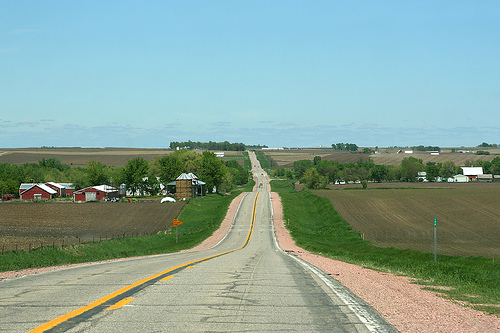
North of Rock Rapids
|
|
PAGE LIST FOR JOHN AND LUANNA THOMPSON AND FAMILY |
...OUR IOWA FAMILY |